



Tummy Tuck Scar: A Complete Guide to Healing, Recovery & Scar Care
You’ve finally decided to reclaim your midsection and step into the version of yourself you’ve been dreaming of. It’s a bold, life-changing move, the kind that shifts your entire perspective when you look in the mirror. But let’s be real: between the excitement of those final results, that nagging, “what about the scar?” question usually starts playing on a loop. It’s the elephant in the room for almost everyone considering a tummy tuck.
But here is the secret: that tummy tuck scar isn’t a badge of “damage” it’s simply the final piece of the puzzle in your transformation. By understanding how your body knits itself back together, you move from feeling anxious about recovery to actually mastering it.
Although a tummy tuck scar is a natural part of the procedure, it doesn’t remain the same throughout recovery. As your body heals, the scar gradually changes in colour, texture, and appearance, often becoming flatter and less noticeable over time. Its final appearance is influenced by factors such as your skin type, the surgical technique used, and how well you care for the incision during recovery. Knowing what to expect at each stage of healing can help you set realistic expectations and feel more confident throughout your recovery journey.
What Does a Tummy Tuck Scar Look Like?
When you first look at your incision, remember that it is a sign of your body’s natural healing process. A tummy tuck scar typically appears as a thin, horizontal line.
At first, the scar might look a little raised or pink, but don’t stress it’s meant to fade down quite a bit as it heals. Plus, most surgeons are absolute pros at tucking that incision so low that you’ll easily be able to hide it under your bikini or underwear without a second thought.
As healing progresses, the redness gradually fades, and the scar becomes thinner, flatter, and closer to your natural skin tone. While it may never disappear completely, most tummy tuck scars become far less noticeable over time with proper care and patience.
The final appearance depends on several factors, including your skin type, genetics, the surgical technique used, and how well you follow your post-operative instructions. Protecting the scar from direct sunlight, keeping the area moisturized, and using recommended scar treatments can significantly improve the healing process.
In most cases, a fully healed tummy tuck scar sits discreetly below the bikini line, making it easy to conceal with everyday clothing or swimwear. For many patients, the confidence gained from a flatter, more contoured abdomen far outweighs the appearance of a small, well-healed scar.
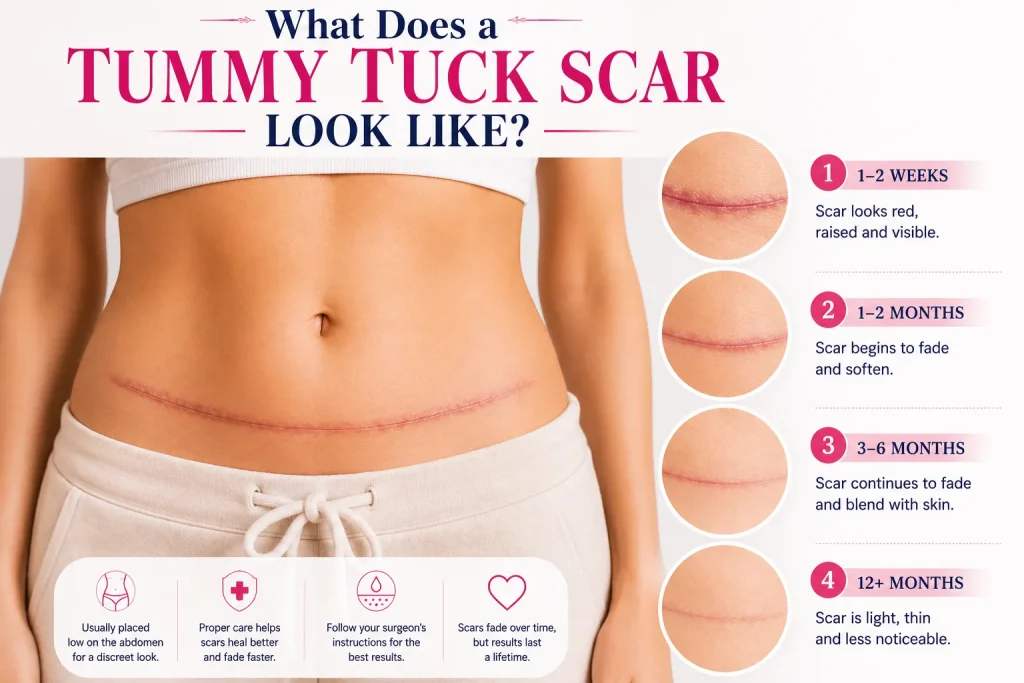
Tummy Tuck Scar Healing Timeline (Week by Week)
Understanding the tummy tuck scar timeline helps you know exactly what to expect at each stage of recovery. Every person’s recovery is unique, but understanding how a tummy tuck scar changes over time can help set realistic expectations. While some patients heal faster than others, most scars follow a similar pattern during the first few months after surgery.
Week 1–2
During the first two weeks, the incision is still in the early stages of healing. The scar may appear red or pink, slightly raised, and tender to the touch. Mild swelling, bruising, and tightness around the abdomen are common during this period. Keeping the incision clean, avoiding strenuous activities, and following your surgeon’s post-operative instructions are essential for proper wound healing.
Weeks 3–6
As your body continues to repair the tissue, the incision gradually becomes stronger. Swelling starts to decrease, and the scar may feel firmer than the surrounding skin due to collagen formation. Although the scar is still noticeable, this is a normal part of the healing process. If approved by your surgeon, you may also begin using silicone-based scar treatments to support healthy scar maturation.
Months 2–6
Between the second and sixth month, most tummy tuck scars begin to soften and flatten. The redness gradually fades, and the scar starts blending more naturally with the surrounding skin. While the scar is still maturing, consistent scar care, sun protection, and regular follow-up visits can help promote the best possible cosmetic outcome.
Tummy Tuck Scar After 6 Months: What to Expect
Reaching the tummy tuck scar after 6 months is a positive turning point in your recovery. this stage of the tummy tuck scar timeline is a positive turning point in your recovery. By this stage, the most intense part of the healing process is behind you.
The scar should be significantly flatter and less sensitive. While it is still visible, the harsh redness has usually subsided, replaced by a lighter, more blendable colour. This is the time when many patients feel most comfortable with their progress.
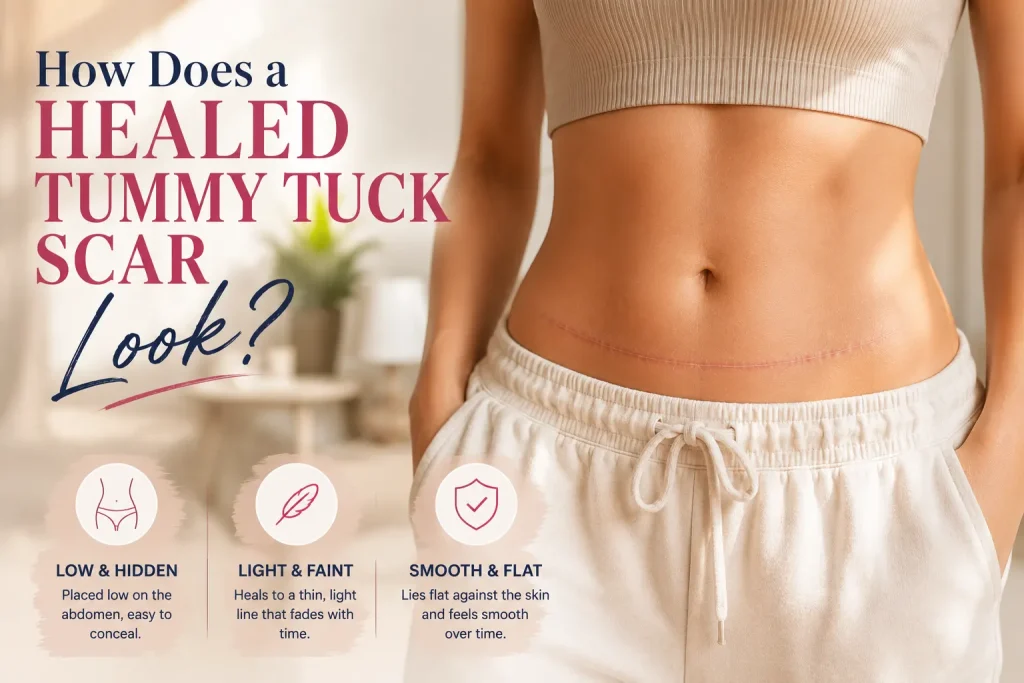
How Does a Healed Tummy Tuck Scar Look?
A healed tummy tuck scar is generally a very faint, thin line. Because it sits low on the abdomen, it blends seamlessly with the surrounding tissue.
It is rarely noticeable to others, and for many patients, it becomes a small, insignificant trade-off for the dramatic improvement in abdominal contour and core strength they have achieved.
Over the following months, the scar continues to soften and blend with your natural skin tone. While complete scar maturation takes time, most patients notice a significant improvement in both color and texture within the first year after surgery.
Consistent aftercare plays an important role in achieving the best possible outcome. Following your surgeon’s instructions, avoiding unnecessary tension on the incision, and protecting the area from direct sunlight can help the tummy tuck scar heal more evenly and become less noticeable over time.
Although every individual heals differently, a fully healed tummy tuck scar is usually a small trade-off for the dramatic improvement in abdominal shape, tighter skin, and renewed confidence that tummy tuck surgery provides.
Mini Tummy Tuck Scar vs Full Tummy Tuck Scar
The length and placement of your scar depend heavily on the specific technique used:
- Full Tummy Tuck: This involves a longer incision spanning from hip bone to hip bone to address loose skin across the entire midsection.
- Mini Tummy Tuck Scar: This version is much shorter and more localised, often limited to the area just above the pubic mound, making it easier to conceal.
Read More About : Who Is an Ideal Mini Tummy Tuck Candidate?
Tummy Tuck Belly Button Scar: Is It Normal?
Yes, it is entirely normal. During a full abdominoplasty, a new opening is created for your navel. This results in a small tummy tuck belly button scar located within the natural contours of the belly button.
Because of its placement inside the navel, this scar is exceptionally discreet and often becomes completely invisible once the area is fully matured.
How to Minimize a Tummy Tuck Scar?
While a tummy tuck scar is a normal part of the procedure, there are several ways to help it heal as neatly as possible. The process starts with choosing an experienced plastic surgeon who carefully plans the incision and uses advanced techniques to reduce tension on the skin. A well-placed incision often results in a scar that is easier to conceal beneath most underwear or swimwear.
After surgery, the way you care for your incision can have a lasting impact on how the scar develops. Following your surgeon’s instructions, wearing your compression garment for the recommended duration, and avoiding activities that place excessive strain on the healing area all contribute to better scar formation. Once the incision has fully closed and your surgeon gives the go-ahead, silicone-based gels or sheets may be recommended to support scar maturation.
Lifestyle choices also play an important role. Eating a balanced diet, staying hydrated, avoiding smoking, and protecting the healing scar from direct sunlight can all promote healthy skin repair. Although every person heals differently, most tummy tuck scars gradually become flatter, softer, and less noticeable over the following months. With patience and proper care, the scar often fades into a fine line that blends more naturally with the surrounding skin.
Care Tips After Abdominoplasty Scar
To achieve the best aesthetic outcome for your abdominoplasty scar, follow these essential care tips:
- Wear Compression Garments: These help manage swelling and provide necessary support to the surgical site.
- Use Silicone Gel or Sheets: Once your surgeon clears you, applying silicone-based products can significantly improve the scar’s texture and colour.
- Sun Protection: UV rays can permanently darken scar tissue. Always keep your scar covered or use a high-SPF sunscreen when exposed to the sun.
- Gentle Massage: After the wound has fully closed, a gentle massage can help break up scar tissue and improve flexibility.
Factors That Affect Tummy Tuck Scars Healing
Every person’s body heals differently, which is why no two tummy tuck scars look exactly alike. While proper scar care plays an important role, several other factors can influence how quickly the scar heals and how noticeable it becomes over time.
Skin Type and Genetics: Your natural skin type and genetic makeup significantly influence how your body forms scar tissue. Some people naturally heal with finer scars, while others may be more prone to thicker or raised scars.
Surgical Technique: The placement of the incision and the technique used to close it can affect the final appearance of the scar. An experienced plastic surgeon carefully plans the incision to reduce tension on the skin and help achieve a more discreet scar.
Smoking and Nicotine Use: Smoking restricts blood flow and reduces the oxygen supply needed for tissue repair, which can slow healing and increase the risk of noticeable scarring. Avoiding nicotine before and after surgery can support better recovery.
Nutrition and Hydration: A balanced diet rich in protein, vitamins, and essential nutrients helps the body repair damaged tissues. Staying well-hydrated also supports healthy skin healing throughout recovery.
Following Post-Operative Instructions: Wearing compression garments, attending follow-up appointments, and following your surgeon’s recovery guidelines can help reduce complications and encourage proper scar healing.
Existing Medical Conditions: Conditions such as diabetes or poor circulation may slow the healing process. Discussing your medical history with your surgeon before surgery helps ensure appropriate care throughout recovery.
Sun Exposure During Healing: Newly healed scars are sensitive to ultraviolet (UV) rays. Protecting the scar from direct sunlight or using sunscreen once recommended by your surgeon can help prevent permanent darkening and support a more even skin tone.
Common Mistakes That Can Make a Tummy Tuck Scar Worse
A well-healed tummy tuck scar depends not only on surgical technique but also on how you care for your body during recovery. Even small mistakes can affect the healing process and make the scar more noticeable. Being aware of these common pitfalls can help support a smoother recovery and improve the overall appearance of your scar.
- Returning to strenuous activities too soon: Lifting heavy objects, intense exercise, or stretching the abdominal muscles before your surgeon approves can place unnecessary tension on the incision and affect scar healing.
- Smoking or Using Nicotine Products: Nicotine reduces blood flow to the healing tissues, slowing recovery and increasing the risk of poor wound healing and more visible scarring.
- Ignoring Your Surgeon’s Instructions: Skipping follow-up appointments, removing dressings too early, or not wearing compression garments as advised may interfere with proper healing.
- Exposing the Scar to Direct Sunlight: Fresh scars are more likely to darken when exposed to UV rays. Protecting the area from the sun during the healing phase can help the scar fade more evenly.
- Applying Products Too Early: Using scar creams, oils, or home remedies before the incision has completely healed may irritate the skin or delay recovery. Always use topical products only after your surgeon recommends them.
Most tummy tuck scars continue to improve over time, but healing requires patience and consistent care. Avoiding these common mistakes can help your scar mature more naturally and support the best possible aesthetic outcome.
When to Consult Your Surgeon (Warning Signs)?
While complications are rare, you should contact your surgeon if you notice:
- Increased swelling, heat, or spreading redness around the incision.
- Foul-smelling discharge or persistent pus.
- Significant separation of the incision edges.
- Unusual or unbearable pain.
Expert Scar Management at Karishma Cosmetic Clinic
At Karishma Laser & Cosmetic Clinic, we don’t just perform surgeries; we guide you through a meticulous healing journey, with your aesthetic outcome as our priority.
- Precision Surgical Techniques: Our highly skilled surgeons utilise advanced incision methods designed to minimise tension, ensuring your tummy tuck scar is as discreet and thin as possible.
- Comprehensive Post-Op Support: We believe the recovery is just as important as the surgery, providing dedicated guidance on scar massage, silicone applications, and specialised care to ensure your tummy tuck scar fades beautifully.
- Legacy of Excellence: With over 25 years of experience in body contouring, our team understands the nuances of skin healing, helping you achieve a smooth, natural-looking abdomen that restores your confidence from head to toe.
Ready to Reveal Your Best Self? Book Your Tummy Tuck Consultation Today!
Let’s be honest: the tummy tuck scar is usually the biggest point of hesitation when considering the procedure. At Karishma Laser & Cosmetic Clinic, we’ve made that our speciality. Our approach is designed for those who want a seamless, refined outcome without the guesswork. We’re here to provide the expertise you need to make an informed decision about your body. Let’s talk about your options.
Frequently Asked Questions
Yes. A tummy tuck involves a surgical incision, so some degree of scarring is unavoidable. However, experienced plastic surgeons place the incision as low as possible on the abdomen, allowing the scar to be concealed beneath most underwear or swimwear. With proper aftercare, the scar typically becomes flatter and less noticeable over time.
A tummy tuck scar usually appears as a thin, horizontal line across the lower abdomen. During the early stages of healing, it may look pink, red, or slightly raised. As the scar matures, it generally becomes softer, lighter in colour, and blends more naturally with the surrounding skin.
No. Tummy tuck scars do not disappear completely, as they are a natural result of the surgical incision. However, with time, proper scar care, and healthy healing, they often fade significantly and become much less noticeable.
Yes, tummy tuck scars are permanent. However, their appearance continues to improve as the healing process progresses. Most scars gradually become flatter, softer, and lighter within 12 to 18 months, making them less visible for many patients.
Yes, but only after the incision has fully healed and your surgeon recommends scar treatment. Silicone-based gels and silicone sheets are commonly advised to help improve the scar’s texture and appearance. Avoid applying creams or home remedies to an open incision without medical guidance.
Although the incision heals within a few weeks, scar maturation takes much longer. For most patients, a tummy tuck scar continues to improve over 12 to 18 months, gradually becoming flatter, softer, and lighter in appearance.