



What Causes Skin Tags On Neck And The Safest Ways To Remove Them?
Have you ever looked closely in the mirror and noticed a small, flesh-colored growth dangling off your skin? Finding skin tags on neck areas is incredibly common, and it happens to many of us out of nowhere. One day your neck feels completely smooth, and the next, you feel a tiny bump that catches on your favourite necklace or shirt collar.
For many people, discovering these small growths prompts a flurry of questions. Why do I have skin tags on neck? You might find yourself searching for answers about why am i getting skin tags on my neck in the first place. What are they made of anyway? At Karishma Cosmetic Clinic, we see patients every day who feel frustrated by these unexpected texture changes and want to know how to handle them safely.
Understanding what causes skin tags on neck structures helps clear up the mystery. These growths are technically harmless, but they can certainly be annoying when they rub against your clothes. Let us dive into the actual reasons behind why these little bumps love to show up on your skin, what a skin tag look like, and the medical options available to clear them up.
What causes skin tags on neck creases?
A major question people ask when visiting us is how do you get skin tags on neck and what causes skin tags in the first place. The main culprit behind a skin tag is simple friction.
When skin rubs against skin, jewelry, or tight clothing for a long period, the constant chafing triggers the body to produce extra cells. This is precisely why small skin tags on neck folds are so common, as our necks move constantly throughout the day and rub against shirt collars.
There are other reasons you might start noticing them. Hormonal changes play a big role, which is why pregnant women frequently develop them. Genetics matter too. If your parents had them, you are much more likely to find them on your own body. Also, metabolic factors like insulin resistance or being overweight can cause them to grow.
If you are wondering why am i getting skin tags all of a sudden, it could be tied to recent weight shifts, hormonal fluctuations, or lifestyle changes that increase skin-on-skin friction.
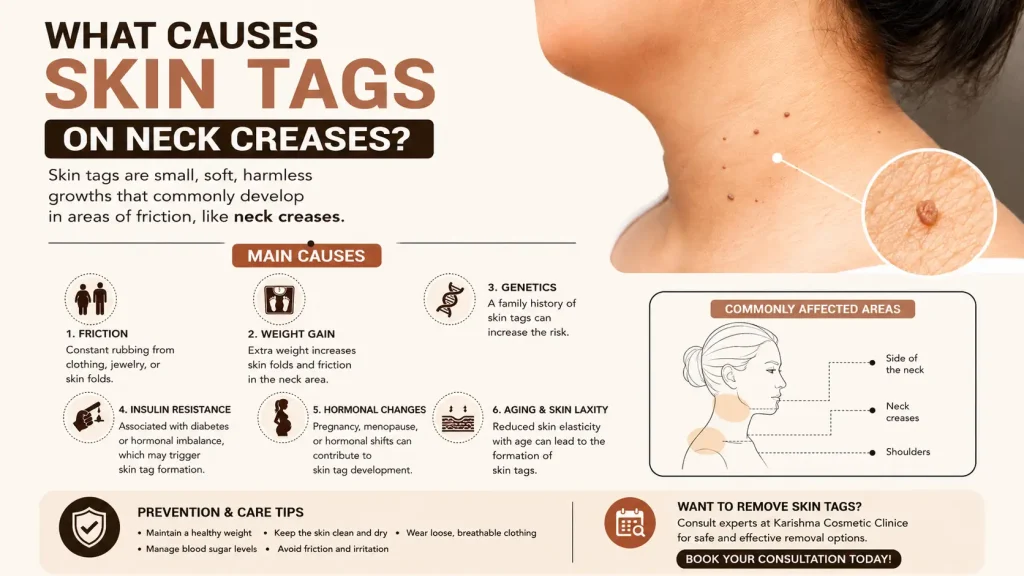
What does a skin tags on neck look like and feel like?
If you are trying to figure out what is on your skin, you might wonder about the physical traits of these growths. So, what does a skin tag look like exactly? Usually, a skin tag is a soft, small piece of hanging skin that might be flesh-colored, a pink skin tag, or slightly darker.
They often dangle from a tiny, thin stalk called a peduncle. They can be microscopic, but a large skin tag can grow to the size of a grape. If you want to confirm what they look like, checking pictures of skin tags can give you a helpful visual reference.
You might also ask, what is a skin tag made of? These growths are completely benign and consist of loose collagen fibers, nerve cells, and tiny blood vessels wrapped up in a thin layer of skin. Because they contain real tissue and blood flow, they are not like simple warts. They are soft to the touch and move around easily when you push them.
Can skin tags become painful or infected?
Most of the time, these little growths do not cause any trouble at all. They just sit there. However, things can change if they get caught on your zipper or clothing. If you are wondering why does my skin tag hurt, it is usually because the stalk has been twisted, cutting off its tiny blood supply, or it has been irritated by constant rubbing. An irritated skin tag can become red, swollen, and tender.
In some cases, a torn or scratched growth can turn into an infected skin tag. If bacteria get inside the broken skin, the area can become painful, ooze pus, or turn warm to the touch. Another common concern is whether you can find cancerous skin tags.
True skin tags on neck are entirely benign and are not cancerous. However, other skin lesions like moles or skin cancers can sometimes mimic their appearance. If a growth changes color rapidly, bleeds without being touched, or a skin tag hurts constantly without reason, it is vital to have a professional check it out.
Safe skin tag removal methods versus dangerous home remedies
When people find these bumps, their first instinct is often to look up how to remove skin tags on neck in one night. The internet is full of wild advice, from tying dental floss around the base to applying harsh home chemicals.
You might wonder, can you cut off a skin tag at home? Or maybe you have thought about cutting off skin tag tissue with nail clippers. Dermatologists strongly advise against this.
Trying to cut or rip a growth off at home carries heavy risks. Because these growths contain actual blood vessels, home removal can cause heavy bleeding that is difficult to stop.
It also opens a direct gateway for bacteria, leading to infections and nasty scars. Furthermore, home remedies do not work like professional treatments and often leave a piece of the stalk behind, meaning the growth can easily return.

Removing skin tags safely: How professionals perform skin tag removal?
If you want them gone, you are probably researching how to get rid of skin tags on neck spots effectively. The best option is to seek professional skin tag removal at a qualified clinic.
A trained specialist can clear the growths in a matter of minutes during a simple office visit. The method chosen usually depends on the size and location of the bump. At Karishma Cosmetic Clinic, safe and sterile methods for removing skin tags on neck are used to achieve clean results:
Electrodesiccation: A tiny medical tool sends an electric current through the stalk. This burns the tissue and seals the blood vessel simultaneously to prevent bleeding.
Surgical excision: For a larger growth, the provider numbs the area with a local anesthetic and uses sterile surgical scissors to snip it away cleanly at the base.
These methods ensure minimal discomfort, no bleeding issues, and a much lower risk of scarring.
Also Read – Are Warts Contagious and How to Get Rid of Them Safely
How to prevent skin tags on neck areas?
Once you get rid of them, you will likely want to know how to prevent skin tags on neck areas from forming again in the future. While you cannot change your genetics or completely halt the aging process, you can take a few simple steps to reduce the friction that triggers them.
Try wearing looser clothing around your neck and avoiding heavy, abrasive metal necklaces that constantly chafe your skin. These simple steps may help reduce the development of skin tags on neck areas prone to friction. Keeping your skin dry and using a little anti-chafing powder in areas where skin rubs together can also help. Managing your systemic health by eating a balanced diet and keeping your blood sugar stable can also reduce the metabolic triggers that cause these bumps to sprout.
Trust the experts for effective skin tags on neck treatment and care.
If you are tired of dealing with irritating bumps and are looking for professional skin tag removal near me, let the experienced team at Karishma Cosmetic Clinic help you. Our specialists provide safe, quick, and hygienic treatments to clear your skin and restore your smooth texture. Book your consultation today.
Frequently Asked Questions
You have them primarily due to friction caused by skin rubbing against skin, clothing collars, or necklaces. Genetic predispositions and hormonal shifts also make your skin more prone to developing these small growths.
No, they typically do not disappear on their own. Once the tissue forms, it stays attached unless the blood supply gets twisted and cut off naturally, which can cause it to fall off, though this is rare and can be painful.
No, they are completely non-contagious. They are not caused by a virus like warts are, so you cannot catch them from someone else or spread them to other parts of your own body through touch.
They usually itch because they are being irritated by sweat, clothing fibers, or jewelry rubbing against them. Persistent itching can also occur if the tissue is lightly inflamed from friction.
Yes, skin tags on breast areas are very common. They frequently develop underneath the breasts or along the bra line where tight underwires and elastic cause constant friction against the skin.
Yes, the extra skin on neck that people often notice is usually a skin tag. It forms due to friction and appears as a small, soft growth on the neck’s surface.